Rushey Green Upholstery Cleaning Guide for Local Flats
If you live in a Rushey Green flat, you already know the small things can make a home feel bigger, fresher, and easier to live in. Upholstery is one of them. A sofa that looks tired, a dining chair with mystery marks, or a fabric armchair holding onto cooking smells can quietly drag a room down. This Rushey Green Upholstery Cleaning Guide for Local Flats breaks the job into simple, sensible steps so you can protect your furniture, reduce wear, and choose the right cleaning approach without guesswork.
Flat living brings a few extra realities: tighter hallways, shared entrances, lift access that may be limited, neighbours below who would rather not hear a machine at 8 a.m., and fabrics that pick up everyday life fast. Truth be told, upholstery in local flats often gets more use than people realise. The good news? With the right approach, most pieces can be cleaned safely and made to look and smell far better than before.
Below, you'll find practical guidance on methods, timing, mistakes to avoid, and when it makes sense to go beyond basic spot cleaning. There's also a checklist, a comparison table, and a few local-minded tips that make life in a flat just a bit easier.
Contents
- Why Rushey Green Upholstery Cleaning Guide for Local Flats Matters
- How Rushey Green Upholstery Cleaning Guide for Local Flats Works
- Key Benefits and Practical Advantages
- Who This Is For and When It Makes Sense
- Step-by-Step Guidance
- Expert Tips for Better Results
- Common Mistakes to Avoid
- Tools, Resources and Recommendations
- Law, Compliance, Standards, or Best Practice
- Options, Methods, or Comparison Table
- Case Study or Real-World Example
- Practical Checklist
- Conclusion
- Frequently Asked Questions
Why Rushey Green Upholstery Cleaning Guide for Local Flats Matters
Upholstery cleaning matters in Rushey Green flats because the furniture in compact homes works harder. A sofa often doubles as a dining seat, a laptop desk, a guest bed, and, if you have children or pets, a magnet for crumbs, fur, and the odd spill. In a smaller space, these things don't just stay in one corner either. They spread through the whole room. You notice it more when the windows are closed and the heating's been on for a while. That slightly stale, lived-in smell? It usually starts in soft furnishings.
There's also the practical side. Dust, skin oils, drink marks, and everyday grime can build up gradually, so by the time the fabric looks dull, there's often more going on than surface dirt. Regular upholstery care helps preserve the fibres, reduce the chance of permanent staining, and keep your flat feeling properly looked after rather than "a bit lived-in". Nothing wrong with lived-in, of course. But there's lived-in and then there's stubbornly grubby.
For flats in particular, good cleaning choices also help you avoid disruption. You may not have room to leave pieces drying for long. You may need quieter methods. And if you're in a block with shared access, you'll probably want a service that works around stairways, parking limits, and narrow doors without turning the day into a logistics puzzle.
That is why a clear, local, flat-focused guide helps. It gives you practical expectations before you start, which saves time and avoids those expensive "I wish I'd checked that first" moments.
How Rushey Green Upholstery Cleaning Guide for Local Flats Works
Upholstery cleaning is not just "spray something on and hope". Done properly, it starts with identifying the fabric, checking the care label, and understanding the type of soil or staining you're dealing with. Different materials respond differently. Cotton blends, microfiber, wool-rich fabrics, velvet, and synthetic upholstery all need slightly different handling. If you treat them the same, you can end up with rings, flattening, colour loss, or a texture that just looks wrong.
In most flat-cleaning situations, the process usually follows a fairly sensible pattern:
- Inspection: The cleaner checks the fabric type, visible marks, wear, seams, and any risk areas such as armrests or cushions.
- Vacuuming: Dry soil, dust, and crumbs are lifted first so they don't turn into mud during wet cleaning.
- Spot testing: A small hidden area is tested to make sure the fabric reacts well to the chosen method.
- Pre-treatment: Stains, oils, and traffic marks are loosened with suitable solutions.
- Main clean: Depending on the fabric, this may be low-moisture cleaning, hot water extraction, or careful steam-based work where appropriate.
- Rinse or fibre grooming: Residue is reduced and the pile is reset where needed.
- Drying: Airflow is encouraged, and the furniture is left to dry fully before use.
In a flat, the drying stage matters more than most people expect. It's not glamorous, but it is the bit that keeps upholstery from developing that damp, musty edge. If you've ever sat on a sofa that felt almost clean but not quite dry, you'll know exactly what I mean.
Professional services often pair upholstery work with related treatments such as sofa cleaning, stain removal, or even pet stain and odour removal when there's a more specific problem to solve. For a larger refresh across the flat, some people also combine it with carpet cleaning so the whole room feels cleaner at once.
Key Benefits and Practical Advantages
Clean upholstery does more than look nice. The benefits show up in daily life, and that's what makes the effort worthwhile.
- Better appearance: Fabrics look brighter, more even, and less tired.
- Reduced odours: Soft furnishings can hold onto cooking smells, pet odours, and general indoor air residue.
- Improved comfort: Clean fibres feel fresher and less sticky, especially on often-used armrests and seat cushions.
- Longer fabric life: Removing embedded grit helps prevent premature wear.
- Better first impression: Handy if you're hosting visitors, preparing for a tenancy inspection, or thinking about a move.
- Less frustration: Spot-cleaning becomes easier when the fabric isn't already heavily soiled.
There is also a quieter benefit people often overlook: a cleaner room feels easier to live in. You walk in after work, see the sofa looking cared for, and the whole flat seems calmer. Small thing? Maybe. But real.
If you are comparing service options, it can help to review professional upholstery cleaning alongside other household services like rug cleaning or curtain cleaning, because soft furnishings tend to age together. One pristine item next to three dull ones can look a bit odd, to be fair.
Who This Is For and When It Makes Sense
This guide is useful if you live in a one-bedroom flat, a converted property, a purpose-built block, or shared accommodation around Rushey Green and you want your furnishings to stay in decent condition. It's especially relevant if you have:
- a fabric sofa that gets daily use
- chairs with food or drink marks
- pet hair, smells, or occasional accidents
- young children and frequent spills
- allergies or sensitivity to dust
- rented furniture that needs careful treatment
- a flat with limited space for drying or moving items
It also makes sense after a particular event: a party, a house move, a tenancy check-out, a season of closed windows in winter, or a spell of humid weather when fabrics just don't seem to feel fresh. That damp summer smell can creep in slowly. You notice it one evening and think, "Right, this needs sorting."
If the upholstery has a delicate label, deep dye transfer, or a serious stain that has already been fixed in place by time, a cautious professional approach is usually the better bet. For items that have also marked surrounding flooring, a combined service may be more efficient, for example pairing the job with steam carpet cleaning where the room needs an overall reset.
Step-by-Step Guidance
If you want to handle the job properly, not just quickly, follow a methodical process. Rushing upholstery is where mistakes start.
1. Read the care label first
Before you use any cleaner, check the manufacturer's instructions. Some fabrics allow water-based cleaning, while others only tolerate solvent-based or low-moisture treatment. If the label is missing or unreadable, be conservative. That's not being timid; that's being wise.
2. Test a hidden patch
Choose an inconspicuous area such as the back edge or lower rear panel. Apply a small amount of the chosen product and wait to see if there's a colour shift, fibre distortion, or sticky residue. A minute spent here can save a very awkward afternoon later.
3. Remove loose dust and crumbs
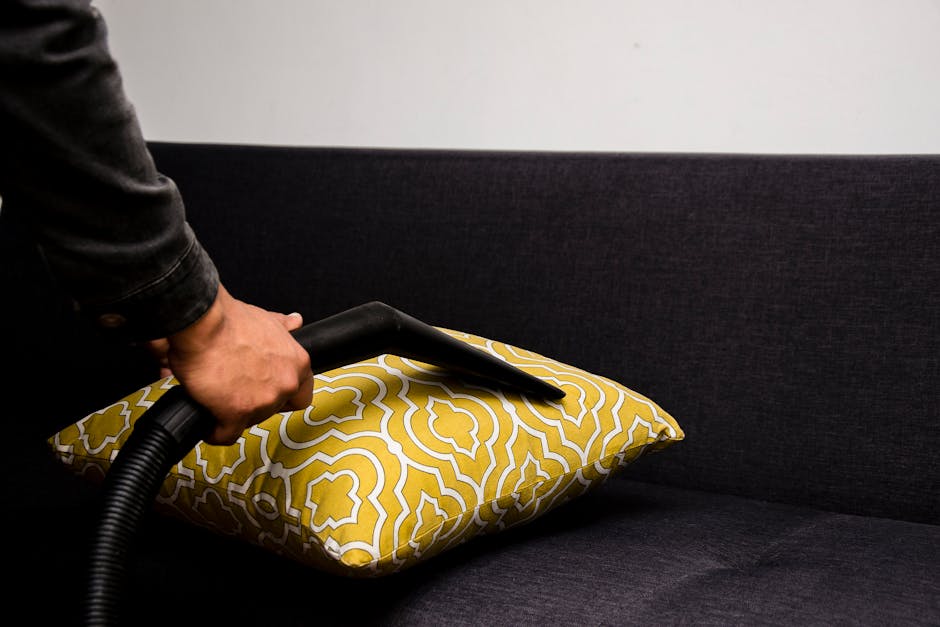
Vacuum thoroughly using the upholstery attachment. Get into the seat creases, beneath cushions, and along seams. This is the unglamorous bit, but it makes every later step more effective.
4. Deal with stains one by one
Don't attack the whole sofa if the problem is one cup ring or one oily patch. Blot, do not scrub. Work from the outside of the stain inward so you don't spread it. If the stain is greasy, it usually needs a different treatment from a tea mark or a muddy print.
5. Choose the right cleaning method
Lightly soiled items may only need spot cleaning and a gentle overall refresh. Heavier buildup may call for a deeper clean with specialist extraction. Delicate items need measured moisture and careful drying. The method should fit the fabric, not the other way around.
6. Control the drying process
Open windows if weather allows, use airflow where safe, and keep cushions separated while they dry. In a flat, this stage can feel slow, but it matters. Nobody wants a sofa that seems dry on the surface and soggy underneath by bedtime.
7. Reset the room
Once dry, vacuum again if needed and fluff cushions back into shape. That final tidy-up makes the result look more finished. Slightly annoying step, yes. Worth it, absolutely.
Expert Tips for Better Results
There are a few small habits that make a surprisingly big difference to upholstery care in flats.
- Clean before stains age: Fresh marks are much easier to lift than older ones that have settled in and oxidised.
- Watch humidity: On damp days, drying takes longer. Plan accordingly, especially in rooms with poor airflow.
- Use white cloths for blotting: Coloured cloths can transfer dye, which is exactly the sort of nonsense nobody needs.
- Work cushion by cushion: This keeps the job organised and reduces missed spots.
- Mind the seams and piping: Dirt collects there, and those edges can fray if handled too aggressively.
- Protect surrounding surfaces: If your flat has wood floors or a rug nearby, keep them shielded from overspray and runoff.
- Schedule cleaning sensibly: Mid-morning is often better than late evening because you gain more drying time before bed.
One more practical thing: if your sofa sits close to a radiator, move it slightly away while drying. Heat can help, but direct concentrated warmth can be harsh on some fabrics. A gentle airflow is usually safer than blasting it. Common sense, really, though it's easy to forget when you want things to dry fast.
If you are trying to build a broader cleaning plan for the flat, it can be useful to look at the whole soft-furnishings picture, including mattress cleaning and rug cleaning, because dust and odour often move between these items over time.
Common Mistakes to Avoid
Most upholstery damage doesn't come from one dramatic mistake. It comes from a few small ones repeated in a hurry.
- Using too much water: This is the big one. Saturated fabric can take ages to dry and may develop rings or odours.
- Scrubbing hard: Scrubbing pushes dirt deeper and can roughen the pile.
- Skipping the test patch: A shortcut that can become a costly lesson.
- Using the wrong product: Not every stain wants the same treatment, despite what the bottle claims.
- Leaving cushions damp: That almost-clean smell can turn musty if drying is incomplete.
- Ignoring the frame and padding: Surface cleaning alone won't help if moisture has seeped too far in.
- Cleaning only when it looks bad: Waiting until the fabric is visibly grimy usually means more effort for a weaker result.
A slightly less obvious mistake is forgetting the building context. In a flat, noisy equipment use, water management, and access planning matter. If you live above other homes, it's simply respectful to keep disruption down. No drama, just decent neighbourly behaviour.
Tools, Resources and Recommendations
You do not need a van full of gear to keep upholstery in good shape, but a few basic tools help a lot.
| Tool or Item | What It Helps With | Best Use in a Flat |
|---|---|---|
| Vacuum with upholstery attachment | Dust, crumbs, loose debris | Weekly maintenance and pre-clean preparation |
| White microfibre cloths | Blotting spills and applying small amounts of solution | Spot cleaning without colour transfer risk |
| Soft brush | Lifting pile and loosening dry soil | Delicate agitation on fabric surfaces |
| Fan or safe airflow | Drying support | Reducing drying time in smaller rooms |
| Appropriate upholstery cleaner | Targeted stain and soil removal | Only after checking fabric compatibility |
For more technical or sensitive items, a professional cleaner may also use controlled extraction equipment, low-moisture systems, or stain-specific treatments. If you are comparing options, the service pages for sofa cleaning and stain removal are useful reference points for the types of issues that commonly turn up in flats.
And if you're wondering whether this should all be tackled alongside carpets: often, yes. A room feels noticeably fresher when upholstery and flooring are cleaned together, because the smell and dust sources are dealt with in one go.
Law, Compliance, Standards, or Best Practice
For local flats, the main compliance issue is usually not a complicated legal one; it is sensible, safe working practice. If you hire someone, you want a provider that takes care with chemicals, ventilation, electrical equipment, and water use in a domestic setting. In a block of flats, that also means respecting shared spaces, entry arrangements, and building rules.
Good practice generally includes:
- checking access instructions before arrival
- using suitable products for the fabric rather than a one-size-fits-all cleaner
- working carefully around walls, skirting, and shared hallways
- keeping equipment tidy so communal areas stay safe and clear
- communicating clearly about drying time and aftercare
If you're hiring a company, it's sensible to review its health and safety policy and insurance and safety information. That's not being picky. It's basic due diligence, especially in a block where any slip, spill, or equipment issue affects more than one person.
You may also want to check service terms and payment details in advance, particularly if you need a specific appointment window or if access to the flat can be awkward. The pages on terms and conditions and payment and security can help set expectations before anything is booked. That sort of clarity saves awkward conversations later, which, let's face it, nobody enjoys.
Options, Methods, or Comparison Table
There is no single best upholstery cleaning method for every flat. The right choice depends on fabric type, how dirty the item is, and how quickly it needs to be back in use.
| Method | Best For | Pros | Trade-Offs |
|---|---|---|---|
| Light spot cleaning | Small fresh spills and isolated marks | Quick, inexpensive, low disruption | Not enough for deep soil or odour |
| Low-moisture upholstery cleaning | Routine refresh on many modern fabrics | Faster drying, minimal disruption | May struggle with older embedded stains |
| Hot water extraction | Heavier grime on suitable fabrics | Deep soil removal, strong refresh | More drying time, not for every fabric |
| Specialist stain treatment | Wine, oil, pet marks, unknown stains | Targeted approach, better stain control | Needs correct identification and careful use |
In a Rushey Green flat, low-disruption methods are often the favourite because they fit modern living better. But if a sofa has years of built-up traffic marks, a deeper clean may be the only sensible answer. It really depends on the item, not the wishful thinking.
Case Study or Real-World Example
Here's a realistic flat scenario. A two-seat fabric sofa in a Rushey Green apartment had a mix of coffee marks, dull armrests, and a faint smell that became noticeable in the evening. The owner had been trying to clean it with supermarket wipes, which helped for a day, then the marks returned. Very common story, that.
The cleaner first checked the fabric, tested a hidden area, and identified the main issues as body oils, drink marks, and general dust in the seams. After vacuuming, the sofa was pre-treated in sections, then cleaned using a fabric-appropriate method with controlled moisture. The armrests needed a second pass. The room was kept ventilated and the cushions were rotated during drying so air could move evenly.
The outcome was not magic, just proper process. The sofa looked more even in colour, the smell dropped away, and the owner said the whole room felt lighter. Not like a showroom. Just cleaner, calmer, more usable. That's usually the real goal in a flat. You want your furniture to work for you, not quietly annoy you every time you sit down.
For a similar combined refresh, people often pair upholstery work with curtain cleaning or carpet cleaning, especially where the room has collected a lot of everyday city dust.
Practical Checklist
Use this checklist before you start, or before you book a cleaner. It keeps the job simple.
- Check the fabric care label.
- Identify the main issue: dust, spill, odour, pet stain, or general dullness.
- Vacuum the upholstery thoroughly.
- Test any product in a hidden area.
- Blot, don't scrub.
- Use the least aggressive method that will still do the job.
- Protect nearby flooring and walls.
- Allow proper drying time.
- Keep cushions separated while drying.
- Ask about aftercare if using a professional service.
- Re-check the fabric once dry for any lingering marks or stiffness.
If you're juggling a small flat, a busy week, and limited drying space, this checklist can save a lot of back-and-forth. Simple, but it works.
Get a free quote today and see how much you can save.
Conclusion
Rushey Green upholstery cleaning for local flats is really about making sensible choices. Read the fabric properly. Treat stains calmly. Keep moisture under control. And be realistic about what a quick spot clean can do versus a deeper professional refresh. When upholstery is looked after regularly, a flat feels cleaner, looks better, and stays more comfortable to live in.
If there's one takeaway, it's this: don't wait for soft furnishings to look dramatically dirty before you act. By then, the job is harder and the results are usually less satisfying. A bit of timely care goes a long way, and in compact homes that difference shows up fast. Small space, big impact. Funny how that works.
When in doubt, start gently, stay consistent, and choose the approach that protects both the fabric and the flat around it. That's the quiet win.
Frequently Asked Questions
How often should upholstery be cleaned in a flat?
For most flats, a light vacuum and spot care should happen regularly, while a deeper clean is usually needed when the fabric starts looking dull, holding odours, or showing repeated stains. High-use sofas need attention sooner than occasional chairs.
Can I clean upholstery myself safely?
Yes, if the fabric is suitable and you keep the process gentle. Vacuum first, test a hidden area, and use minimal moisture. If the item is delicate, heavily stained, or has no clear care label, professional help is the safer option.
What is the best method for flat upholstery cleaning?
It depends on the fabric and the problem. Low-moisture cleaning works well for many modern fabrics in flats because it dries faster. Heavier soiling may need extraction, but not every material can tolerate it.
How long does upholstery take to dry in a flat?
Drying time varies with fabric, room temperature, humidity, and airflow. In a smaller flat, airflow can help, but damp weather or poor ventilation can slow things down. It is best not to use the furniture until it is fully dry.
Will upholstery cleaning remove pet smells?
It can help a lot, especially if the smell is sitting in the fibres rather than deeply in the padding. Strong pet odours or repeated accidents may need a more targeted treatment such as pet stain odour removal.
Can all fabric sofas be steam cleaned?
No. Steam or hot water methods are not suitable for every upholstery type. Some fabrics can shrink, fade, or distort if too much heat or moisture is used. Always check the care label and test first.
What stains are hardest to remove from upholstery?
Old oil-based marks, dye transfer, set-in food stains, and pet-related stains are often the most stubborn. The sooner you treat them, the better the chance of improvement. Age really does matter here.
Is professional upholstery cleaning worth it for a small flat?
Often, yes. In a small flat, one sofa or chair can affect the whole room's appearance and smell. Professional cleaning can be worthwhile when the item is heavily used, awkward to dry, or too valuable to risk with DIY methods.
How can I keep upholstery cleaner for longer?
Vacuum it regularly, deal with spills immediately, rotate cushions, and avoid eating on soft furnishings if possible. A throw can help, but it's not a miracle shield. A little maintenance goes a long way.
Do I need to move furniture before a cleaner arrives?
Usually just clear access around the item and remove loose belongings, cushions, and fragile objects nearby. In a flat, access planning matters, so it helps to have hallways and entrances clear before the appointment.
Should I book upholstery cleaning with other services?
If your sofa, rugs, curtains, or carpets all look tired at the same time, combining services can make the whole flat feel much fresher. Many people consider rug cleaning, curtain cleaning, or carpet cleaning alongside upholstery work for a more complete result.
How do I choose a trustworthy cleaner for a flat?
Look for clear communication, appropriate fabric knowledge, and sensible safety information. It also helps to review the company's about us, health and safety policy, and insurance and safety pages before booking. That gives you a better feel for how they work.
What should I do if a stain comes back after drying?
Some stains wick back to the surface as fabric dries. That does happen. If it occurs, a second targeted treatment may be needed rather than a heavier overall clean. If you're unsure, ask for advice before trying another round yourself.
For next steps, you can also review pricing and quotes if you want to compare options carefully, or check the contact us page when you're ready to talk through the job. And if you care about how the business handles waste and materials, the recycling and sustainability information is worth a look too.
Clean upholstery won't solve every little thing in a flat, but it does change the feel of the space in a very real way. That matters more than people admit.